
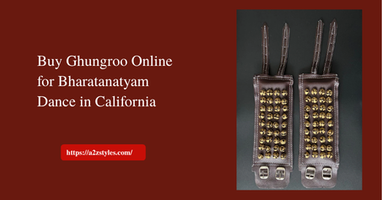
Buy Ghungroo Online for Bharatanatyam Dance in California
Aug 10th 2026
If your daughter's Bharatanatyam or Kuchipudi class in California just told you it's time to buy ghungroo (ankle bells), you're probably wondering where to start leather or velvet, how many bells, what size, and where to actually order from without waiting weeks for shipping from India. Here's a straightforward guide to help you buy the right pair today.
What Is a Ghungroo?
Ghungroo also called Salangai in Tamil Nadu, Chilanka in Kerala, and Gajjelu in Andhra Pradesh are the traditional ankle bells worn by classical Indian dancers. Made of small brass bells stitched onto a padded leather or velvet strap, they create the rhythmic jingling sound that accompanies every footwork pattern (adavu) in Bharatanatyam, Kuchipudi, and Kathak.
For dancers training in California whether in the Bay Area, Los Angeles, San Diego, or Sacramento ghungroo are one of the first real "dance gear" purchases a student makes, usually once they've progressed past the very basics and are ready to start practicing adavus with proper sound and rhythm.
Leather vs Velvet Ghungroo: Which Should You Buy?
This is the most common question parents ask, and the honest answer is: both work well, the choice comes down to comfort and preference.
Leather Ghungroo
- Firmer, more structured fit
- Slightly more durable for daily practice
- Classic choice recommended by many gurus for regular training
Velvet Ghungroo
- Softer, more cushioned against the ankle
- Often preferred for younger dancers or sensitive skin
- Slightly more premium look for stage performances
If your daughter practices several times a week, leather tends to hold up better over time. If she's just starting out or has sensitive skin, velvet is usually more comfortable for longer sessions.
How Many Bells Do You Need?
Ghungroo come in different "liners" meaning how many rows of bells are stitched onto the pad. This affects both the sound and the price:
- 2-liner: Best for young children or complete beginners
- 3-liner: Popular for teens and intermediate students
- 4-liner: A common all-around choice for regular performances
- 5-liner: Preferred by adult dancers and advanced students for a fuller, louder sound
As a general rule, the more liners, the richer and louder the sound — but also the heavier the ghungroo. Ask your guru what they recommend before buying, since some schools have a preference based on their teaching style.
What Does a Good Pair of Ghungroo Cost?
Quality ghungroo with real brass bells typically range from around $20 to $30 per pair, depending on the number of liners and the padding material. Be cautious of extremely cheap options thin, low-quality bells wear out fast and lose their bright, resonant tone within a few months of regular practice.
Why Buy Online Instead of Waiting for a Trip to India
Many California dance parents used to rely on relatives visiting India to bring back ghungroo but that means unpredictable waits and no ability to try before your daughter's next class. Buying online from a US-based seller means:
- Fast shipping across California (no multi-week international wait)
- Ability to reorder quickly if bells wear out before a big performance
- No import duty surprises
- Real photos and sizing guidance before you buy
A Real Parent's Experience
One customer shared this after ordering leather ghungroo for her daughter:
"Initially I was concerned about quality and comfort for a child. But when I received it I was pleasantly surprised. The leather is soft and very comfortable for my lil one to wear for a long day."
This is exactly the kind of feedback that matters most for a purchase like this comfort during long practice sessions and performances is just as important as sound quality.
Ready to Order?
Shop our full range of leather and velvet ghungroo, available in 2, 3, 4, and 5-liner options, with fast shipping across California and the rest of the USA.
Shop Leather Ghungroo → Shop Velvet Ghungroo →
Not sure which one to pick? Message us on WhatsApp and we'll help you choose the right size and style for your dancer's level and upcoming performances.
Faq's
1. What age should a child start wearing ghungroo?
Most dance schools introduce ghungroo once a student has learned basic adavus with clean footwork, typically around ages 6–8, though this varies by guru and individual progress.
2. How many ghungroo bells does a beginner need?
Beginners usually start with a 2-liner or 3-liner pair enough bells for a clear sound without being too heavy or overwhelming for a new dancer still learning rhythm.
3. What's the difference between ghungroo, salangai, and chilanka?
They're the same instrument with different regional names Ghungroo (North India), Salangai (Tamil Nadu), Chilanka (Kerala), and Gajjelu (Andhra Pradesh) all referring to the same style of ankle bells used in classical Indian dance.
4. How do you clean and maintain ghungroo bells?
Wipe bells dry after each use to prevent tarnishing, store them in a breathable bag (not sealed plastic) to avoid moisture buildup, and avoid soaking the leather or velvet pad in water.